


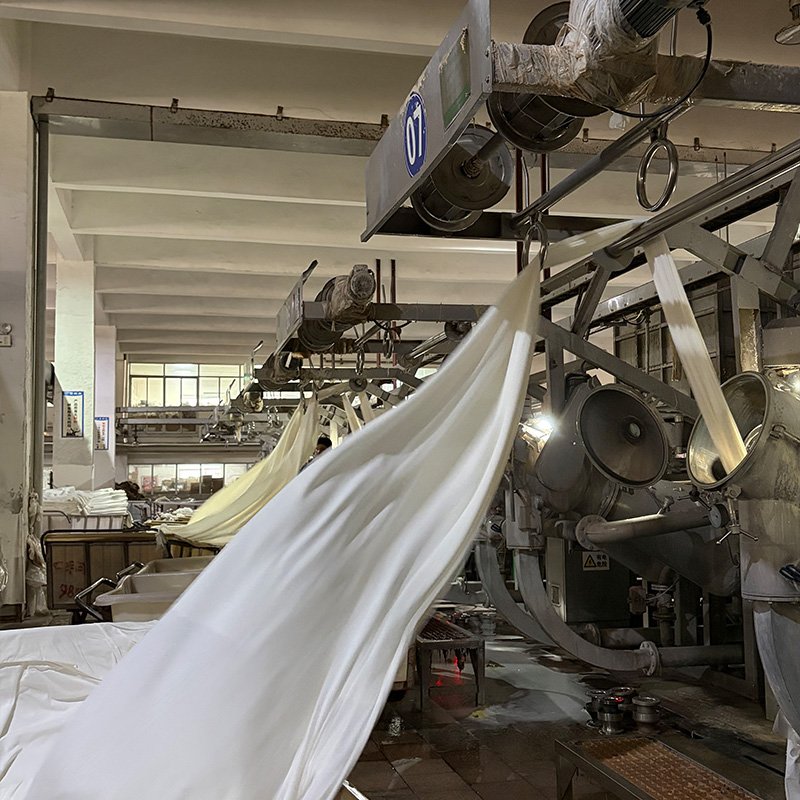
Why You Can Trust JIECE Single Jersey Fabric
- Fast Delivery
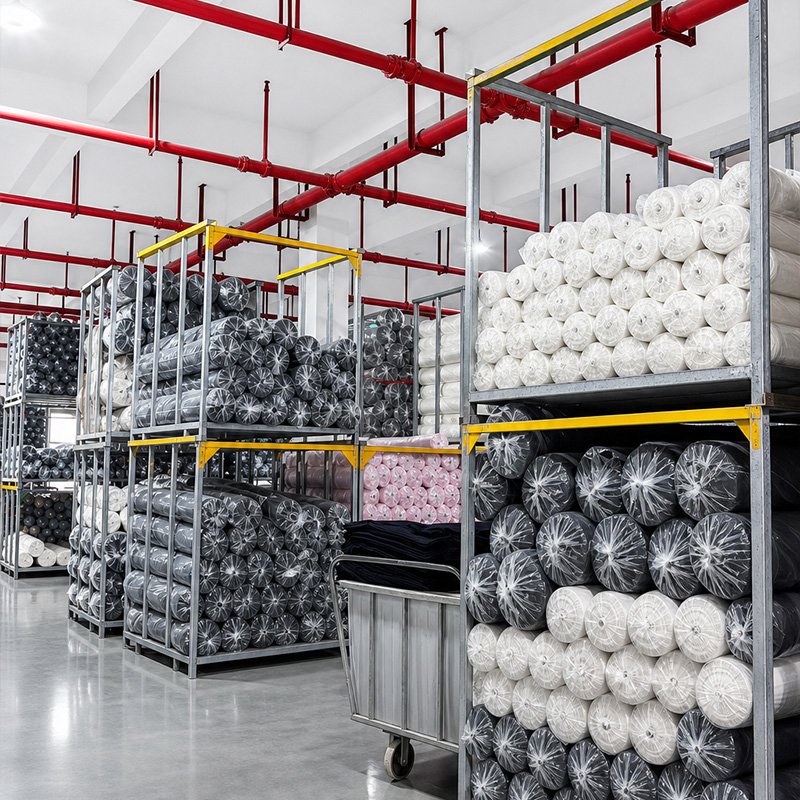
With over 15 years of knitting experience and an annual production capacity of more than 6,000 tons, JIECE supports planned single jersey fabric production schedules and discusses lead times according to yarn availability, sampling, and order requirements. - One-stop Service
From yarn selection and knit construction to finishing, we support customization of single jersey fabric in fiber composition, yarn count, GSM, width, stretch, hand feel, and finishing. - Quality Control
We focus on yarn consistency, loop formation, fabric specifications, widthwise stretch, dimensional stability, and batch-to-batch consistency of single jersey fabric, with quality checks arranged according to the product and order requirements. - Global Delivery
Our own production facilities and export experience support single jersey fabric supply for international apparel customers.
Your Reliable Single Jersey Fabric Supplier
JIECE specializes in the development, production, and supply of knitted fabrics. We support customers with sample development, specification confirmation, production coordination, and bulk order follow-up. Depending on the design, we can discuss fiber composition, yarn count, machine gauge, GSM, width, stretch, surface effect, and finishing to match your target garment.
We help translate your end-use requirements into a workable single jersey specification.For reliable development from sample approval to bulk production, contact JIECE to discuss your single jersey fabric requirements.
Hot Selling Single Jersey Fabric to Choose

A classic single-needle plain knit with uniform loops and a smooth face, piece-dyed to a solid color for T-shirts, underwear, and everyday basics. JIECE controls yarn quality, loop density, dyeing shade, and compacting finishing to keep color consistency and shrinkage from sample to bulk.

Created by knitting yarns in alternating colors or planned sequences.Stripe width, color contrast, and repeat can be developed for casual tops, T-shirts, and leisurewear. JIECE manages yarn color approval, stripe repeat, loop density, and finishing to maintain clear, consistent stripes across production batches.

Regenerated cellulose fibers in a single jersey structure give a fluid, silky hand and a softer drape than cotton alone. These fabrics suit premium loungewear, soft dresses, and drape-focused collections. JIECE helps confirm fiber blend and GSM so the finished fabric delivers the intended drape without unexpected widthwise distortion.
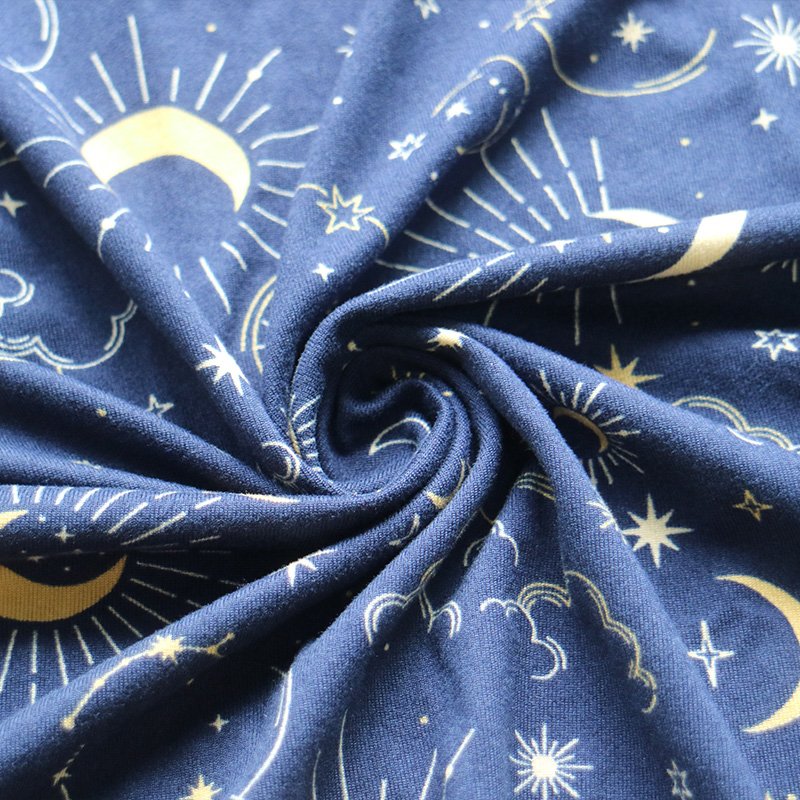
A fine-gauge single jersey fabric engineered for moisture-wicking T-shirts, training tops, and leggings. The single-sided loop structure keeps it lightweight, while polyester/spandex supports quick drying and elastic recovery. JIECE focuses on GSM consistency, widthwise stretch, and surface uniformity so bulk matches the approved sample.
Why Choose JIECE Single Jersey Fabric

JIECE Single Jersey Fabric offers a smooth face and a soft hand feel, making it suitable for comfortable everyday apparel.

Available in different weights and fiber compositions, Single Jersey can provide lightweight comfort and airflow for T-shirts, tops, and casualwear.

The knitted loop structure provides natural stretch, while elastane blends can offer additional elasticity and recovery according to your requirements.

JIECE supports customized composition, GSM, width, color, and finishing, with Single Jersey Fabric sample development and quality checks to help maintain consistency between approved samples and bulk production.
Customize Your Single Jersey Fabric
JIECE supports custom single jersey fabric development for brands and garment manufacturers. Discuss your target fiber composition, yarn count, machine gauge, GSM, width, stretch, hand feel, surface effect, and finishing requirements with our team. We can assist with sample development and specification confirmation before bulk production.
Because single jersey is a thin, single-sided structure, early confirmation of yarn quality, machine gauge, loop density, and finishing route is important for achieving the target hand feel, widthwise stretch, and dimensional stability. Contact JIECE to start your custom single jersey fabric project.

Resource

Single jersey fabric specifications can include fiber composition, yarn count, machine gauge, knit structure (plain, stripe, jacquard, elastane-added), GSM, width, stretch and recovery, shrinkage, torque/spirality, finishing, and relevant physical properties. The final specification should be confirmed against the approved sample and end-use requirements.

ISO, GRS, CE, UDEM, and HIGG-related documentation or certifications should be confirmed for the specific product, facility, and project before being stated as applicable.

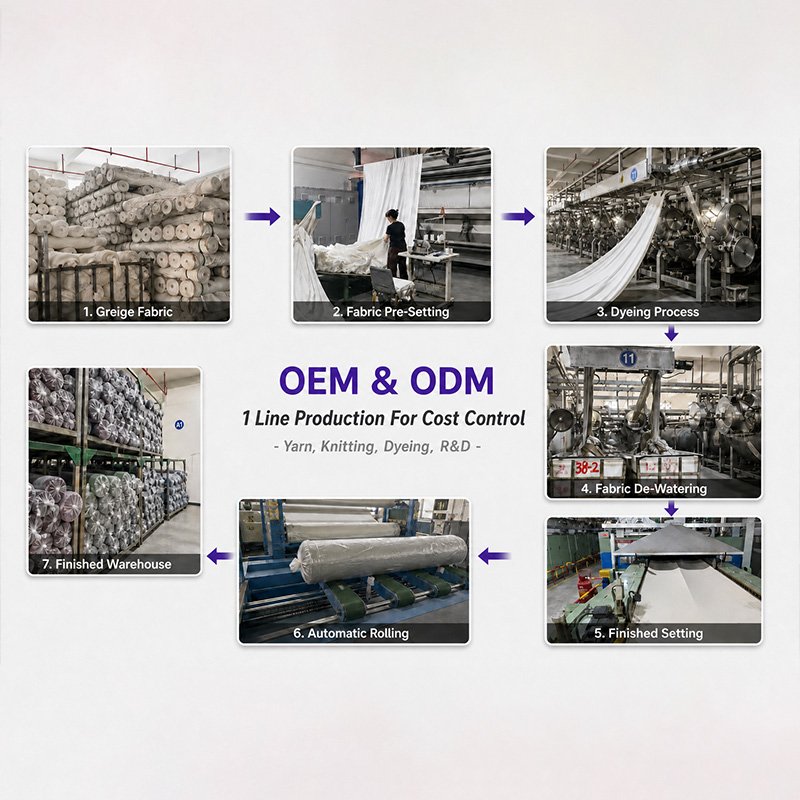
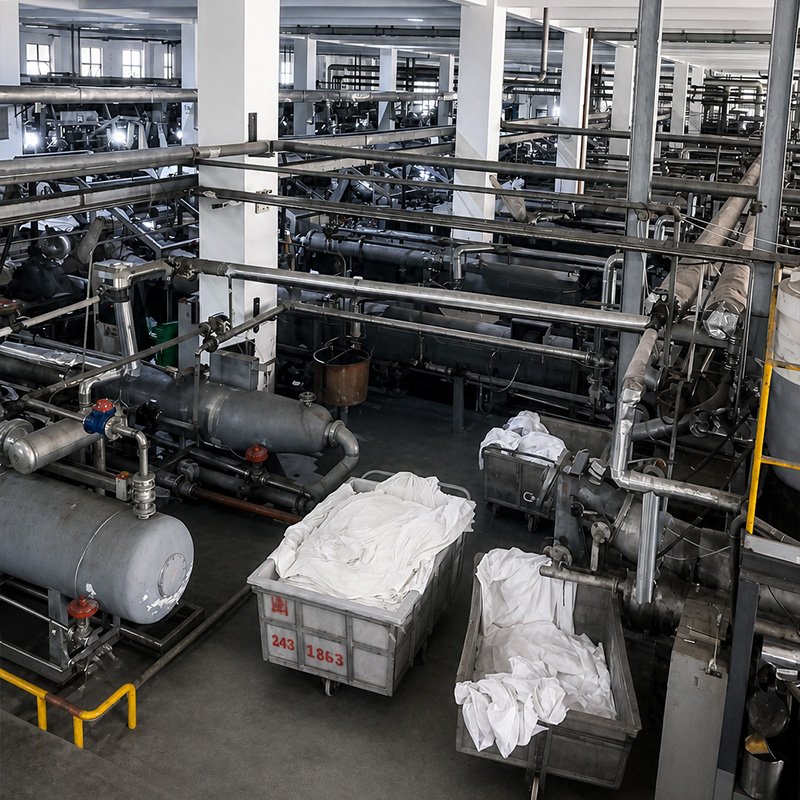
Production footage may cover yarn preparation, circular knitting, dyeing, finishing (compacting, heat-setting, etc.), and quality inspection to help you understand the manufacturing workflow and quality-control process of single jersey fabric .
Your Single Jersey Fabric Development Partner

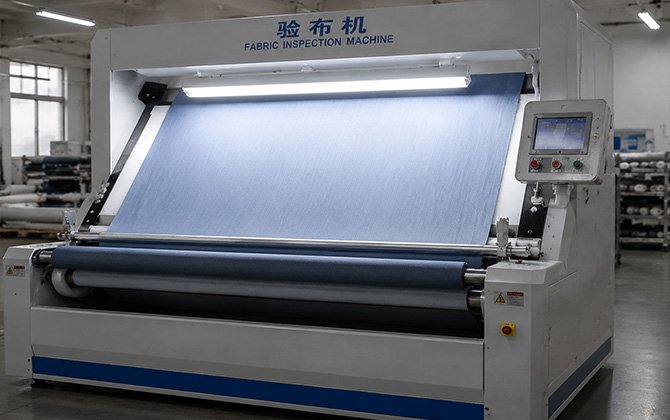
JIECE supports apparel brands, garment manufacturers, and fabric wholesalers with reliable Single Jersey fabric development and supply. With over 15 years of knitting experience and our own production facilities, we help customers develop fabrics that match their product requirements, target specifications, and quality standards.
For single jersey projects, key considerations include yarn count and quality, machine gauge, loop length, GSM, width, widthwise stretch, shrinkage, edge curling behavior, and finishing. We coordinate these factors according to the approved sample and project requirements to support consistent production.
Choose JIECE as your development partner for fabric sampling, specification confirmation, production coordination, and ongoing order support.
Applications of JIECE Single Jersey Fabric

Single jersey fabric is the standard structure for T-shirts, polos, and casual tops. Cotton and cotton-blend single jersey in the 140–180 g/m² range offers a balance of coverage, breathability, and printability. Elastane-added versions improve fit and recovery for fashion tops.

Fine-gauge single jersey fabric in the 80–120 g/m² range is widely used for underwear, vests, loungewear, and base layers, where softness, moisture absorption, and breathability are primary requirements. Cotton, modal blends, and viscose blends are common fiber choices.

Polyester/elastane and nylon/elastane single jersey fabrics are used in athletic T-shirts, leggings, and training tops. The structure can be engineered with moisture-wicking finishes, and elastane content provides the recovery needed for close-fitting garments.

Single jersey fabric’s drape and flexibility allow it to conform to body contours, making it suitable for soft dresses, skirts, and fashion tops. Heavier weights (180–220 g/m²) reduce show-through and improve structure for garment shapes that require more body.

Testimonial
“We needed a lightweight single jersey for our summer T-shirt line with consistent widthwise stretch and minimal torque after washing. The samples were on target, and the team was clear about the finishing route and shrinkage expectations. Production lots have matched the approved standard.”
 James CarterProduct Developer, United States
“We use single jersey for underwear and loungewear, so hand feel and breathability are critical. JIECE helped us confirm the yarn count and finishing to achieve the softness we wanted, and they were straightforward about the edge curling we needed to account for in cutting.”
 Elena RossiSourcing Manager, Italy
“For our activewear tops, we needed an elastane single jersey fabric with reliable recovery. JIECE provided clear specifications for stretch, GSM, and heat-setting, and the bulk fabric performed consistently against our garment tests.”
 Lars BeckerFabric Sourcing Specialist, Germany
JIECE can discuss suitable finishing options according to fiber composition, GSM, and end use. Common options include softening, compacting (to reduce shrinkage and control width), heat-setting (for elastane-containing fabrics and dimensional stability), bio-polishing (for cotton smoothness and pill reduction), and moisture-wicking or antibacterial finishes for performance applications. The final route depends on the fiber, structure, and required performance.
Pilling depends more on fiber quality, yarn twist, and finishing than on the single jersey structure itself. Combed or combed compact cotton, combined with bio-polishing or anti-pilling finishing, significantly reduces surface fuzz and pilling. JIECE can confirm the appropriate fiber grade and finish for your required pilling rating.
Cotton single jersey typically shows 3–5% shrinkage after the first wash, depending on yarn count, loop density, and finishing route. Compacting and pre-shrinking can bring length shrinkage below 3%. JIECE confirms shrinkage against the approved sample and end-use washing standard before bulk production.
In general, wash single jersey with similar colors using a mild detergent and a moderate water temperature. Avoid harsh bleaching agents and excessive heat during washing and drying. Elastane-containing single jersey should avoid high-temperature drying and prolonged exposure to heat, which can degrade recovery. For special fibers or finishes, follow the care instructions confirmed for the specific product.